
I. Hello, Panama! Why all the fuss on November 4th?
In the heart of Panama, amidst the vibrant tapestry of history and culture of the isthmus, November unfolds an unparalleled celebration. But it is not just any festivity; it is the "Day of the National Symbols," a date etched in the Panamanian psyche. Just after Independence Day, on November 3rd, November 4th is dedicated to honoring Panama's symbolic trinity: the Flag, the Coat of Arms, and the National Anthem. Why should we take a moment to observe it? Because it is a profound affirmation of national identity, pride, and the collective Panamanian spirit.
II. Meet the protagonists: The national emblems of Panama!
The Flag: It is said that the flag of a nation is its soul. Designed by María Ossa de Amador, the Panamanian flag is a symphony of colors filled with meaning. The red symbolizes the Liberal Party, the blue the Conservative Party, and the white the peace that seeks to unite them. The stars are celestial guides: the blue reflects purity and honesty, and the red, authority and law, illuminating the path of this young republic.
The Coat of Arms: Designed by Nicanor Villalaz, each element of the Coat of Arms tells a story: from the shovel and pickaxe, which represent labor, to the cornucopia overflowing with abundance, a symbol of the nation's natural wealth and prosperity. At its center is the motto "Pro Mundi Beneficio" ("For the Benefit of the World"), a testament to Panama's fundamental role in global connectivity. And presiding over all this is the majestic harpy eagle, a symbol of sovereignty and vigilance.
The National Anthem ("Isthmian Anthem"): Written by Jerónimo Ossa Escobar, with music composed by Santos Jorge Amatriaim, it is more than just a simple melody. It is a vehicle that carries the emotions, ideals, and deepest aspirations of Panama for freedom and lasting peace.
III. From "Flag Day" to a Full-Fledged Patriotic Celebration: A Historical Perspective
The national symbols of Panama emerged after its separation from Colombia in 1903. November 4 began as a celebration of the flag, the first public manifestation of the country's new identity. Although Law 34 of 1949 formalized the celebration, the flag remained the central element. It was not until Law 2 of 2012 that the Coat of Arms and the National Anthem were duly elevated, consolidating "Patriotic Symbols Day" as a celebration of the three, with official recognition starting in 2013..
IV. This is how patriotism is lived in Panama!
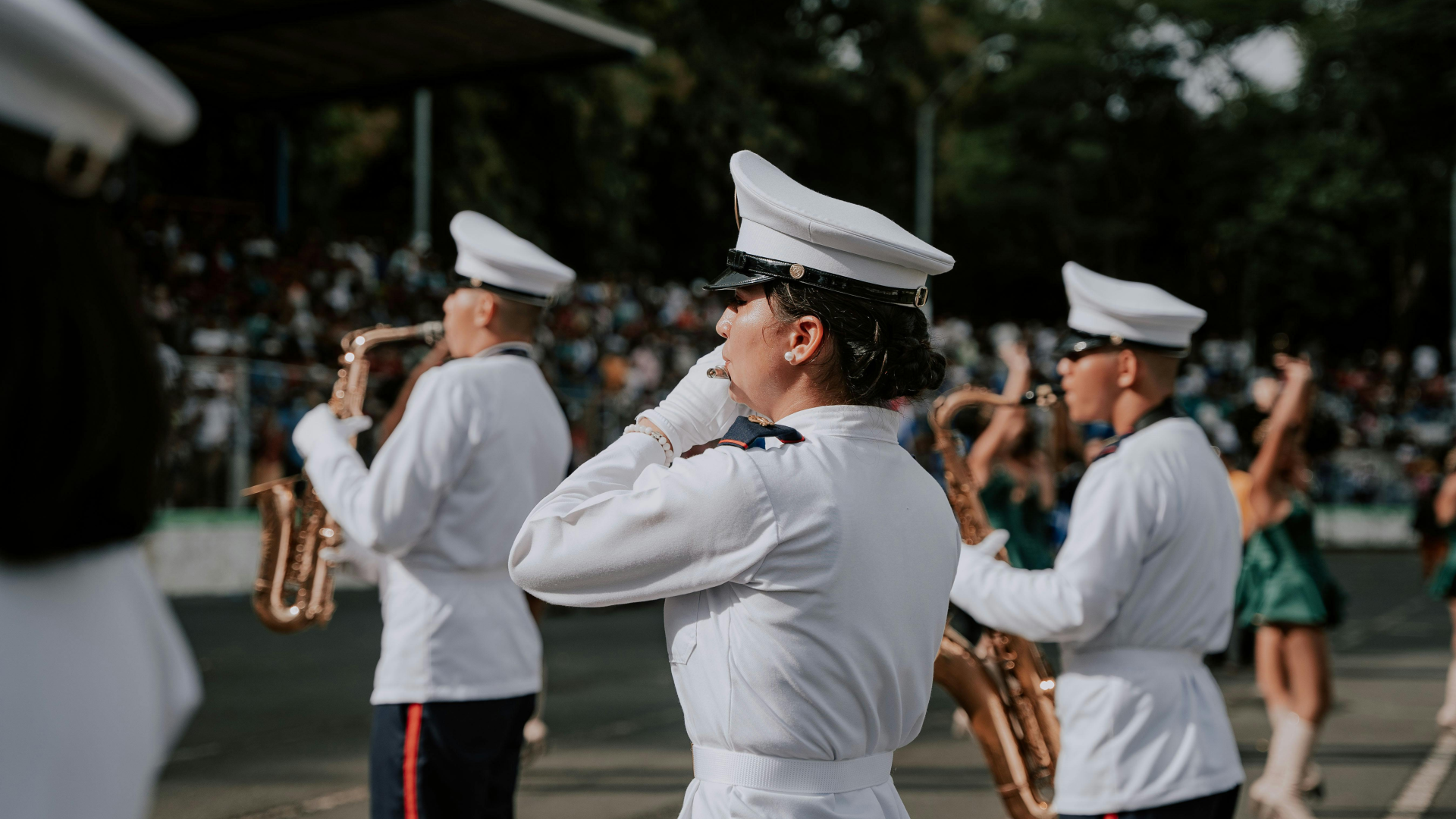
On November 4th, a wave of pride floods Panama. The festivities include lively parades with students, school bands, independent groups, and civic organizations. The flag-raising ceremonies resonate with the solemnity of the National Anthem, while cultural events like the "Parade of a Thousand Polleras" add to the celebration. Educational institutions instill a sense of cultural heritage in the youth, while families proudly display the national colors. Government officials highlight the essence of being Panamanian.
V. Not without drama: The controversies surrounding Panamanian symbols
The national symbols of Panama are not without controversy. The "Martyrs' Day" of 1964, when a torn flag in the Canal Zone sparked riots, forever altering Panama's relationship with the United States. The country's extensive maritime registry, while economically significant, has been linked to sanction evasion and illegal fishing. Then there are the calamities related to the coat of arms, such as the 2010 passport error, where 60,000 passports displayed a hammer instead of a pickaxe. The national anthem has also been subject to scrutiny, including incidents of altered melodies at international events.
VI. What does the future hold for Panamanian patriotism?
Patriotism in Panama is not only celebrated, it is projected into the future with vision and commitment. In a country where national symbols are pillars of identity, the National Commission responsible for their safeguarding works diligently to educate new generations and ensure their correct use. This work is not merely regulatory: it is a commitment to collective memory and respect for what unites us.
In the international arena, Panama continues to strengthen its prestigious maritime registry, a symbol of sovereignty and global leadership. This effort not only protects economic interests but also reinforces the country's image as a reliable and strategic player in global trade.
One of the most anticipated milestones is the relighting of the Bridge of the Americas in 2025. More than an infrastructure project, it will be a symbolic gesture: a bridge that connects generations, reflecting hope, renewal, and the resilient spirit of the Panamanian people. Its light will be a beacon of progress and national pride.
In every corner of the country, efforts persist to cultivate patriotism from the everyday: in classrooms, in communities, in artistic expressions, and in political decisions. Preserving the cultural legacy is not a task of the past, but a constant mission that reinvents itself with each generation..
The future of Panamanian patriotism is built with education, with art, with infrastructure, and with dialogue. It is a living promise that is renewed every November 4th, but is cultivated every day.
VII. The enduring spirit of Panama
Throughout its history, Panama has faced challenges, controversies, and profound transformations. However, its national symbols —the flag, the coat of arms, the anthem— remain as silent witnesses to its evolution and as pillars of its collective identity.
These emblems are not mere ornaments: they are narrators of our memory, guardians of our values, and bridges between generations. They remind us of who we were, who we are, and where we want to go as a nation.
In every flag raising, in every note of the anthem, in every parade and civic act, the emotional pact that unites the Panamanian people is renewed. It is a bond that transcends differences and is strengthened by education, culture, and civic commitment.
Today more than ever, reflecting on the meaning of our national symbols is an act of awareness. It is recognizing that patriotism is not imposed: it is cultivated, lived, and transmitted. And in that cultivation, every Panamanian has an essential role.
The spirit of Panama endures because it lives in its people. In their everyday gestures, in their celebrations, in their resilience. And as long as that spirit continues to beat, the symbols will remain beacons of unity, hope, and belonging.

From its national symbols to its trade routes, Panama is more than history: it is the country that drives logistics.
At Shopping Box, we connect you with that future.

 WhatsApp · Shopping Box